
The necessary evil that makes stories worth telling.
The morally bankrupt, the misunderstood, or the ones who just couldn’t give two shits anymore—the villain.
We’ve all come across stories where the bad guy is so flat and one-dimensional that you can practically predict every heinous act they’re going to pull off—and even the backstory that got them there. But here’s the thing: no hero can truly shine without someone—or something—standing in their way.
Whether that barrier is a person, a group, or an unforgiving environment, it’s that very opposition that forces the hero to rise, evolve, and ultimately overcome.
So, what makes a villain memorable, or even strangely likable, when they’re supposed to be hated, shunned, and despised?
Is it the layers of hidden pain, the moral grey areas they inhabit, or simply the way they expose our own potential for darkness?
In this post, we’re ripping through the clichés to get to the heart of what transforms our cookie-cutter bad guy into a force that not only challenges the hero but also leaves a lasting impression on us as readers. Grab a seat—we’re diving head first into why villains are essential for any story worth telling.
Why We Need Villains in the First Place
Let’s be real: a story without conflict is just a long, boring monologue. And without a solid villain—or at least some form of opposition—there’s no real pressure for the hero to grow, adapt, or question themselves.
The villain is the storm that shakes the tree. They’re the force that disrupts the comfortable world, tears down the illusion of safety, and makes the protagonist do something. Without that disruption, there’s no journey, no transformation—just vibes.
Villains serve as a mirror, a shadow, and sometimes even a twisted version of the hero themselves. They bring out hidden traits, expose weaknesses, and force hard choices. They make things messy. And that mess? That’s where the good stuff lives.
That’s where characters start questioning who they are and what they stand for. The more formidable the villain, the more meaningful the hero’s struggle becomes.
They’re also necessary for theme. A great villain doesn’t just challenge the protagonist physically—they challenge the core idea of the story. Whether it’s questioning justice, identity, love, survival, or power, villains push those big ideas into the spotlight and demand that we, as readers or viewers, take a closer look.
They’re not just there to stir the pot—they are the pot.
So What Actually Makes a Villain Memorable?
A few key ingredients:
- Complex Motivations
A standout villain isn’t driven by evil for the sake of evil. Instead, they believe they’re the hero in their own narrative—whether they’re seeking revenge, justice, or a twisted form of love. - Relatable Backstory
Their dark path is often paved with personal pain, betrayal, or traumatic loss. This gives depth to their actions, making it possible—even if only on some level—for us to understand their descent into villainy. - Moral Ambiguity
Memorable villains blur the lines between right and wrong. Their actions might be reprehensible, but beneath the surface lies a moral grey area that challenges our own conceptions of good and evil. - Charismatic Presence
Whether through wit, charm, or sheer force of personality, a powerful villain has a magnetic draw. Their charisma makes them not just formidable adversaries, but also characters we remember vividly—even if we’re rooting against them. - Unpredictability
The best villains keep you guessing. Their moves may be unconventional, their motivations unexpected—making it hard to predict what they’ll do next, which keeps tension alive.
Even in stories without a traditional villain, some kind of antagonistic force has to exist—be it nature, time, fate, or the hero’s own internal demons. Something has to push back. Otherwise, it’s just a straight line to a predictable ending. And where’s the fun in that?
Let’s Look at Two Villains Who Got It Right
Victor Strand – Fear the Walking Dead
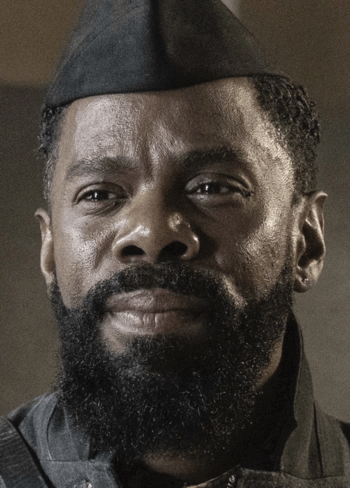
Lately, I’ve been catching episodes of Fear the Walking Dead on and off with my roommates. It was probably around season six when we took a moment to talk about Victor Strand.
One roommate enjoys his character arc and finds him to be an enjoyable villain—while the other isn’t having it, dismissing him and calling him all sorts of colorful names to boot. Me? I’m in the middle. I haven’t seen enough of his arc to judge him the way my roommates do, but even in that indifference, I understand why he makes a memorable villain.
Despite the gaps in his backstory from my perspective, his character exudes that critical blend of charisma, moral ambiguity, and complex motivations. He’s not just a villain on paper—he’s someone whose actions force a confrontation with uncomfortable truths about power, survival, and the fine line between right and wrong.
When we first meet him, he’s on a boat with Madison and her family. We get vague glimpses of who he was, but not enough to truly understand him. That mystery makes him compelling, but it’s his actions as the series progresses that solidify his villainy.
In season seven, Victor fully embraces his villain era. He becomes the charismatic leader of a tower after nukes decimate the land, offering safety—while making increasingly questionable moral decisions. His idea of “saving” people is warped. He leads irradiated walkers to the tower just to prove a point to Alicia. That’s not just manipulation; that’s the wrong thing done for a reason he thinks is right.
And that tension? That’s the whole point.
The Joker – The Dark Knight (2008)
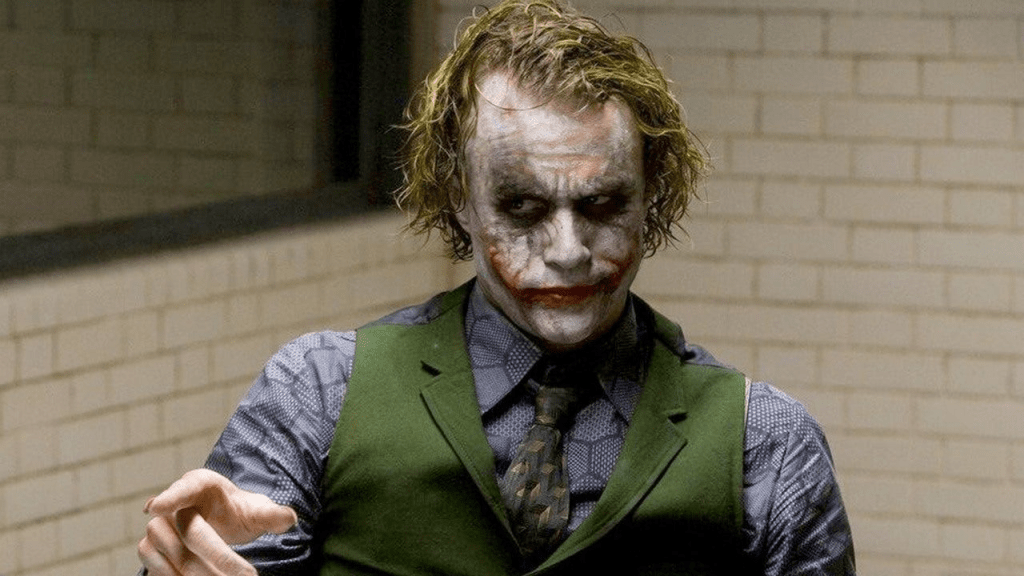
Now let’s talk about chaos incarnate.
Heath Ledger’s Joker in The Dark Knight is a villain who doesn’t just oppose Batman—he defines him. With no clear backstory, an obsession with disorder, and that chilling charisma, Joker embodies unpredictability and moral ambiguity to the fullest.
He doesn’t want power. He doesn’t care about money. He wants to prove a point: that under the right circumstances, anyone can fall. That’s terrifying.
He’s not out for revenge. He’s not shaped by a tragic past we can sympathize with. He’s the embodiment of chaos, and there’s no logic to soothe us. That’s what makes him unforgettable.
Take the ferry scene. Two boats. Each holding the detonator for the other. It’s not just a test—it’s a philosophical nightmare. Joker’s not interested in winning. He’s interested in breaking the illusion of order, one gut-wrenching moral dilemma at a time.
And somehow, even in the madness, we lean in. We listen. Because this villain doesn’t just challenge Batman’s tactics—he challenges his ideals. His limits. His identity.
And that’s the mark of a villain who’ll stay with you long after the credits roll.
Conclusion
At the end of the day, a good villain isn’t just there to stir up trouble—they’re there to matter.
They hold the story’s tension in their hands, daring the hero—and us—to face hard truths, uncomfortable questions, and parts of ourselves we’d rather keep hidden. Whether they’re charismatic manipulators, tragic figures shaped by pain, or agents of absolute chaos, villains give stories their edge.
They test the limits of our heroes. And sometimes? They test ours too.
Because we don’t just remember the battles won or the grand speeches—we remember the moments that made us question who was right, who was wrong, and what it really means to choose a side.
The best villains don’t just challenge the hero. They elevate the entire story. And when done right, they haunt the narrative long after it’s over—not as monsters, but as necessary shadows that made the light burn brighter.
So if you’re writing a story, building a world, or crafting a character arc that needs to hit hard—don’t sleep on your villain. Make them count. Make them unforgettable.
Because without them, you’re not just missing a character. You’re missing the pulse of the entire story.
Let me know what villain(s) live rent free in your head in the comments below
or
let me know if you would like a reading to create your next great villain or flesh out one in your current porject(s)
Until time,
Keep exploring, keep writing,
and don’t be afraid to let a little foolishness guide the way.
Your next story might just begin with that one wild, unexpected step forward.
— Tsuuri
 Pen & Intuition
Leave a comment